Cars that drive themselves, facial recognition, detecting cancel potentially better than a doctor these are some of the technologies that artificial intelligence is fuelling and to potential to add trillions of dollars to nation’s GDP the race to become an AI superpower is on.
In the age of AI, data is the new oil, so china is new Saudi Arabia.

There is lot of buzz around artificial Intelligence now and the term AI is thrown a lot.
Let’s look at definition of AI we must go back to the earliest and purest definition the official idea and the definition of AI was first coined by Jay McCarthy in 1955 at Dartmouth Conference
“Every aspect of learning or any other feature of intelligence can in principle be so precisely described that a machine can be made to simulate it. An attempt will be made to find how to make a machine use language, form abstractions and concepts, solve kinds pf problems now reserved for humans, and improve themselves.”
These are few examples of Artificial Intelligence:
- Machine Learning
- Computer vision
- Natural Language processing robotics
- Pattern recognition
- Knowledge Management
There is different type of AI in terms of approach for example strong AI and weak AI.
Strong AI is simulating the human brain by building system that think and, in the process, give us an insight into the how the brain works.
Weak AI is system which behave like a human but doesn’t give us an insight into the how brain works.
High Tech Education in china
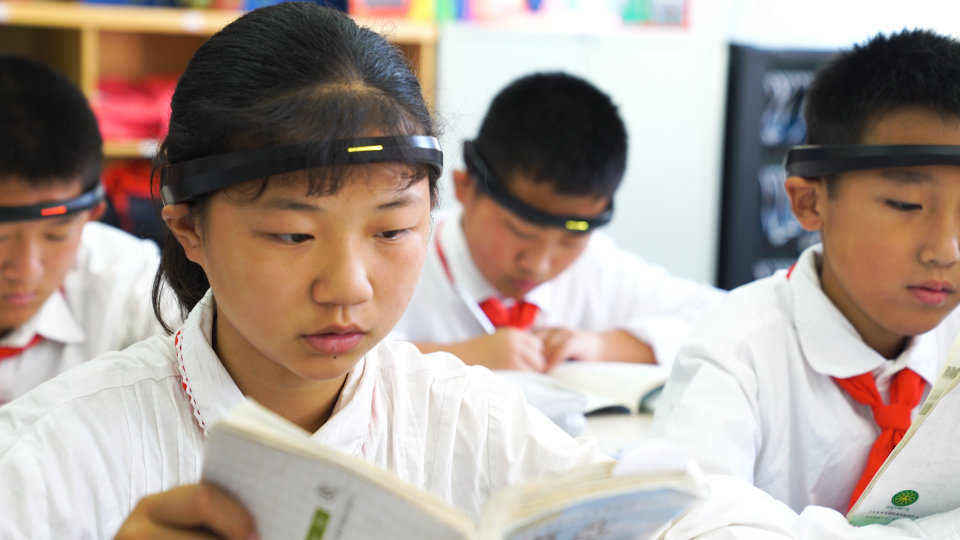
Teacher in school in china know exactly when someone is not paying attention.
Headband measure each student’s level of concentration. The information is then directly sent to the teacher’s computer and to parents.
China has big plans to become global leader in artificial intelligence, it has enabled cash less economy, where people make purchases their faces.
A giant network of surveillance camera with facial recognition helps police monitor citizens. Meanwhile, some school offer glimpse of what the future of the high-tech education in the country might look like.
Classroom have robots that analyse student’s health and engagement level. Student wear uniform with chips that track their locations. There is even surveillance camera that monitor how often student check their phones or yawn during classes.
These gadgets have alarmed Chinese netizens. But school says it wasn’t hard for them getting parental consent to enrol kids in what is one of the world’s largest experiments in AI educations. A programme that’s supposed to boost student’s grades while also feeding powerful algorithms.
The govt has poured billions of dollars into this project bringing together tech giants, start-up and schools.
Some AI experts predict that AI will be able to do anything that humans can but do it better. This is a questionable assumption, but AI will surely surpass humans in specific domains. A chess computer beating the world chess campion was the first example.
If AI were to develop to the point that it can do everything better than humans, it would mean that it would also do better in science and technology. It may decide that it is no longer worthwhile to develop a certain field of research – or it may decide space travel is a waste of time if humans on earth are living in poverty and more than a billion people have no access to clean drinking water.
Most scenarios about future AI are hypothetical, but AI presents us with existential questions. It shows that where science stops, philosophy and spirituality begin.
 Computer Industry